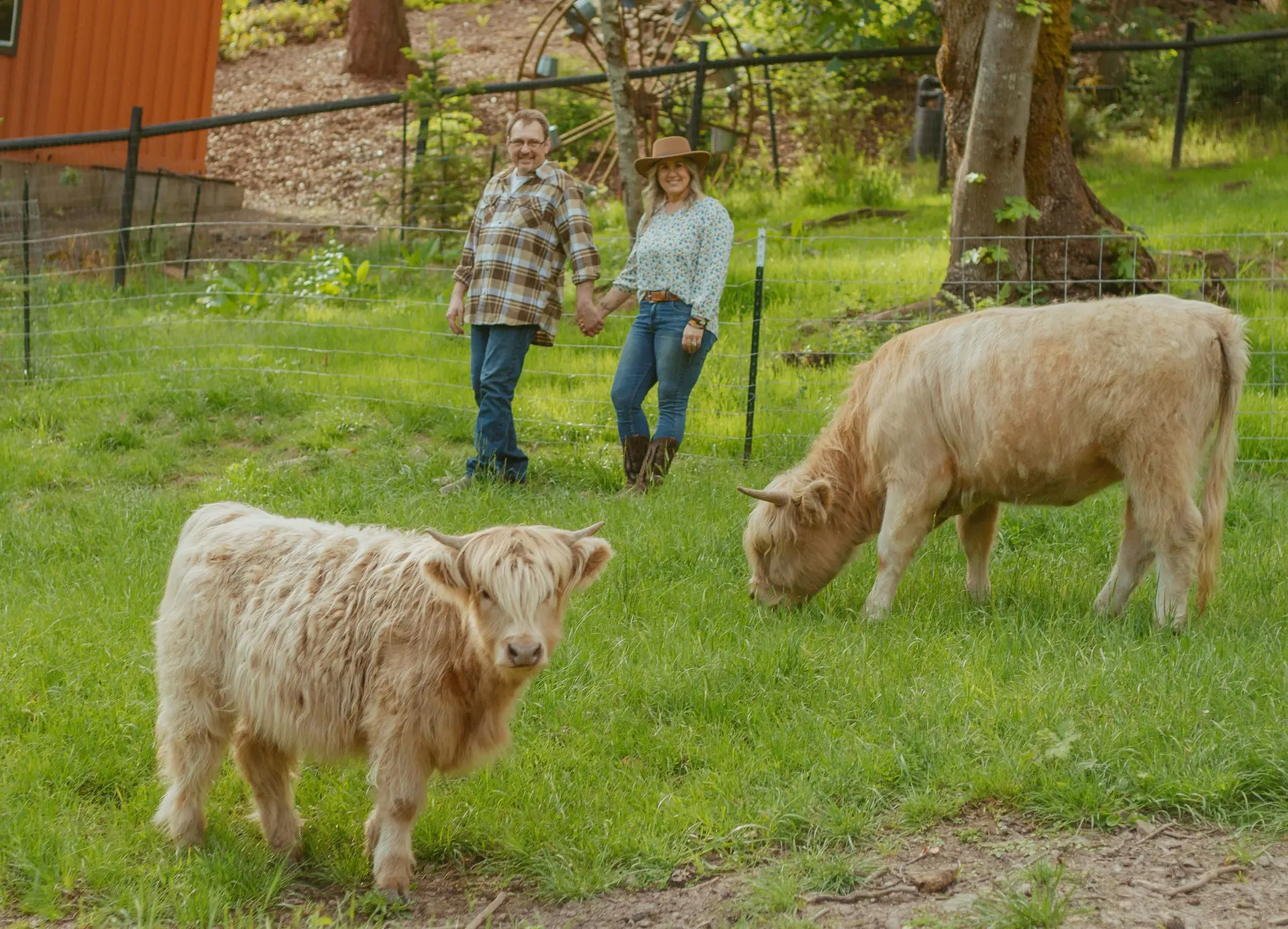
If we’re being completely honest… we didn’t set out to build a Highland cattle breeding program.
It started with a picture on Facebook. One of those cute, fluffy “mini cows” that stops your scroll and makes you think, “We need one of those.”
At the time, we were coming out of 2020 — the “toilet paper crisis” season — and like a lot of people, we were thinking more about sustainability. Growing our own food. Being a little less dependent on systems that suddenly didn’t feel so dependable.
So naturally, we thought… let’s get a couple cows. Simple enough, right? Except everyone else had the same idea. Cows were nearly impossible to find.
We ended up finding a small fold that needed to be rehomed about an hour away from us, and in May of 2021, we brought them home. There were seven total. Two went straight to what would later become our partner farm, and the rest came here.
At that point, we didn’t have a program.
We didn’t have a long-term plan.
We just had cows.
And one of them was a three-year-old steer.
His purpose, ultimately, was to feed our family. That was part of the whole idea of becoming more sustainable. But walking through that process on our small farm — being present for it, being part of it — was more than our hearts could handle.
He lived a really good life here. He was brushed, handled, cared for right up to the very end. It was quick, it was calm, and he had no idea what was happening.
But for us… it changed something.
From that point on, we made a decision. All of our beef would go through our partner farm, Noble Rose Ranch. Over the years, that relationship has grown into something really special. They run cattle on over a hundred acres of organic grassland, and they handle that side of things in a way that aligns with our values.
And here on our farm, we pivoted. What we thought we were building wasn’t actually what we were building.
Learning What Highlands Actually Are
Somewhere along the way, we also realized something else…
Those “mini Highland cows” we fell in love with on Facebook? That’s not really a thing in the way people think it is.
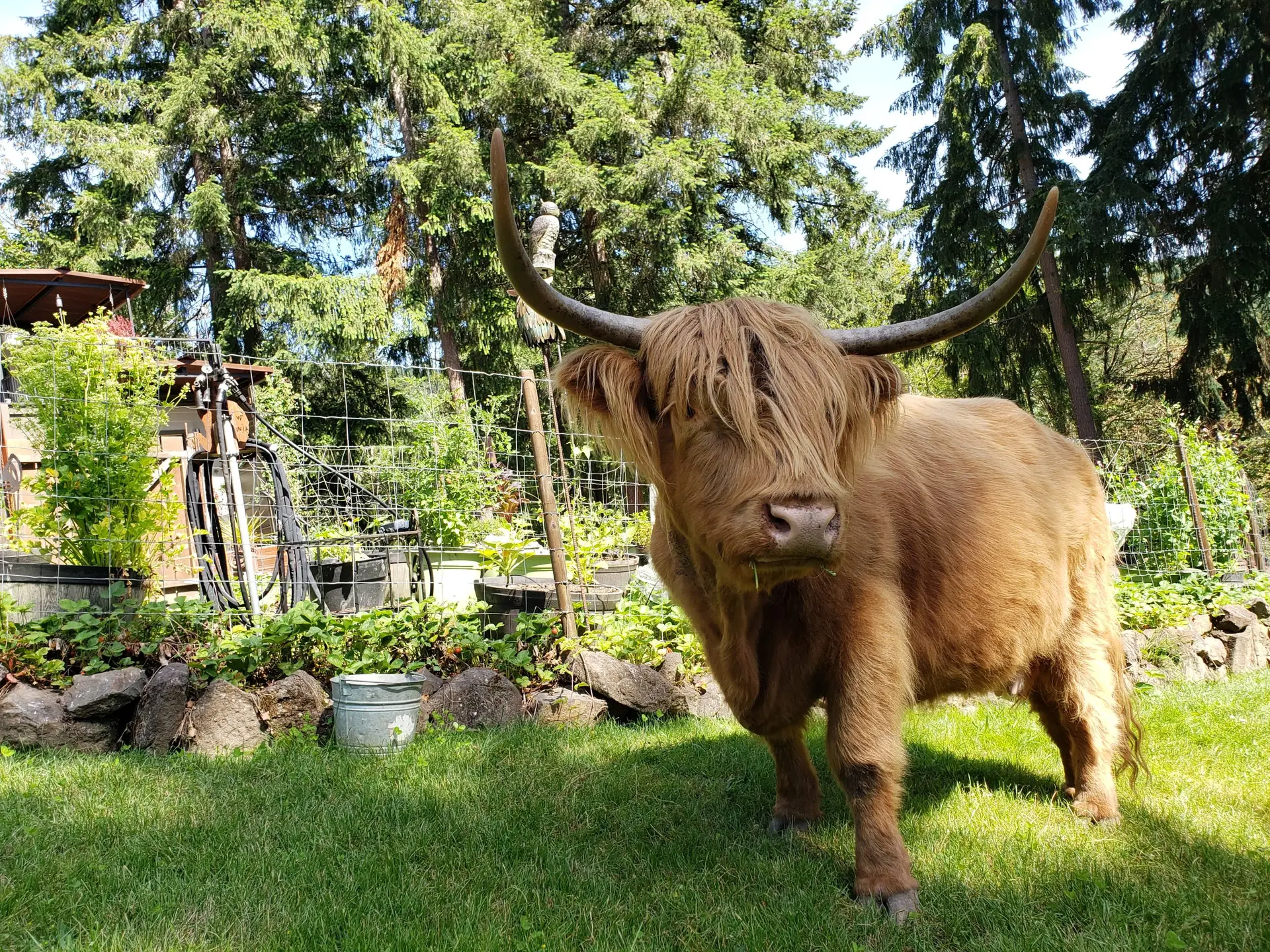
True, registered Highland cattle are not small animals. A mature cow is typically in the 1,000–1,200 pound range. Bulls can be 1,800–2,200 pounds. They are big, powerful animals.
They’re also incredibly hardy, good foragers, and generally docile — but they do have horns. And those horns matter. You learn very quickly that you don’t work cattle the same way you might with other breeds.
Funny enough, when we first went to pick them up, Dave was convinced we were going to need steel-toed boots. After working them a few times, we realized something pretty quickly — you don’t get close to their feet. They have a natural “bubble” because of their horns, and you learn to respect that space. You’re far more likely to get bumped by a horn than stepped on.
So no… we never ended up needing steel-toed boots. Most days, it’s rubber boots. (And if we’re being honest… occasionally it’s my Hey Dudes in the summer, even if Dave would prefer we didn’t admit that.)
Starting Over — This Time With Intention
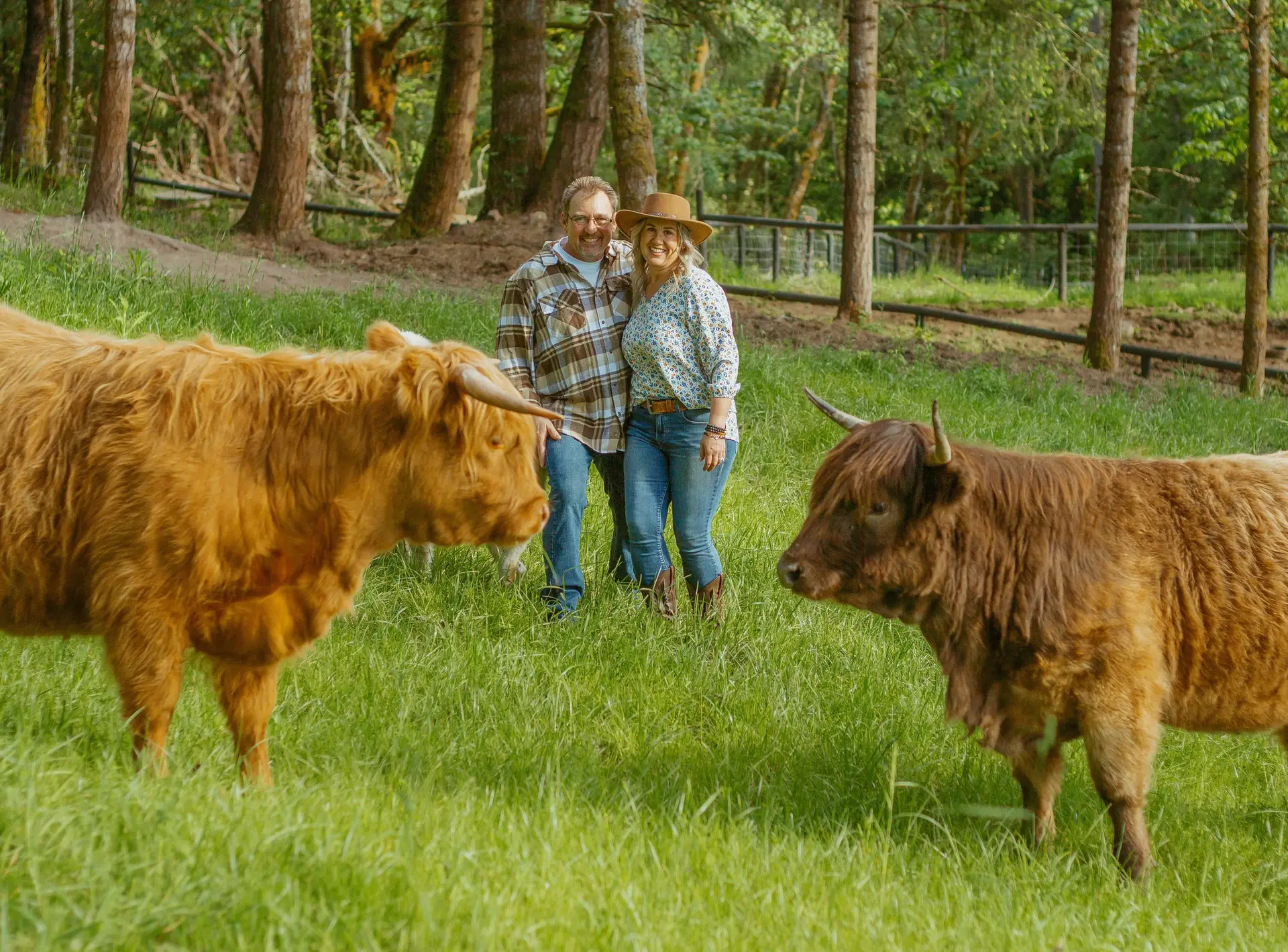
That first group of cattle taught us a lot. But they also showed us that they weren’t going to take us where we wanted to go.
So we made another hard decision.
They went to live at our partner farm, where they have more space and are still living really good lives — just on a larger scale than what we can offer here.
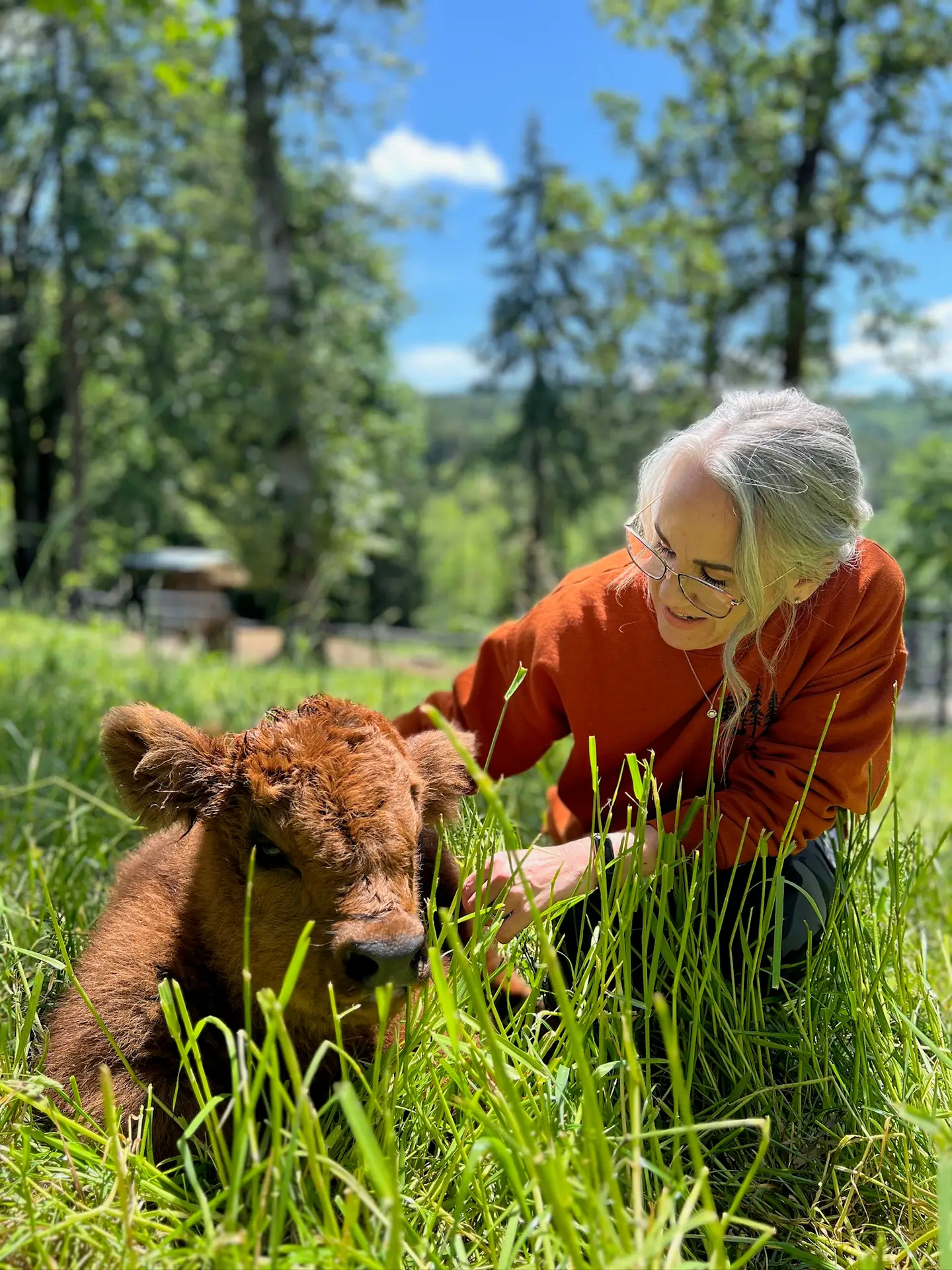
And we started over. Our first real step into building something intentional was a heifer born right here on our farm — HCA Juliet’s Heavenly Jade.
Jade changed everything for us. She was the first one that made us realize… this could be something more. Since then, we’ve been slowly rebuilding our fold — not fast, not flashy — just buying the best genetics we could afford, one piece at a time.
We added Squires Farm Captain Janeway. We brought home WL Maple from Minnesota.
We’ve continued adding and adjusting as we’ve learned what we like, what works, and what fits the program we’re trying to build. Because at some point, it stopped being about “having cows.”
It became about building something good.
What We’re Actually Building Now
Today, our focus is completely different than where we started. We are not raising beef on this farm. We are building quality Scottish Highland cattle genetics in the Pacific Northwest.
That means we’re paying attention to:
- Structure and conformation
- Temperament
- Maternal traits
- Feet and longevity
- How these animals fit together long-term
We’ve worked with a breeding consultant to help guide our decisions. We’ve learned how to evaluate cattle beyond just what looks good in a photo. And we’ve continued to refine what we want this program to be.
Dave and I even became AI-certified so we could artificially inseminate our own cattle. We don’t do a huge volume, so we’re still learning every season, but we’ve had success — and it allows us to bring in genetics we otherwise wouldn’t have access to.
We also run a bull now — Mad Dog Mattis of KM3, a son of Howling Springs King Maker — who covers the rest of our cows.
And just like everything else on this farm, we’ve learned as we’ve gone.
Adjusted.
Pivoted.
Refined.
The Honest Version of the Story
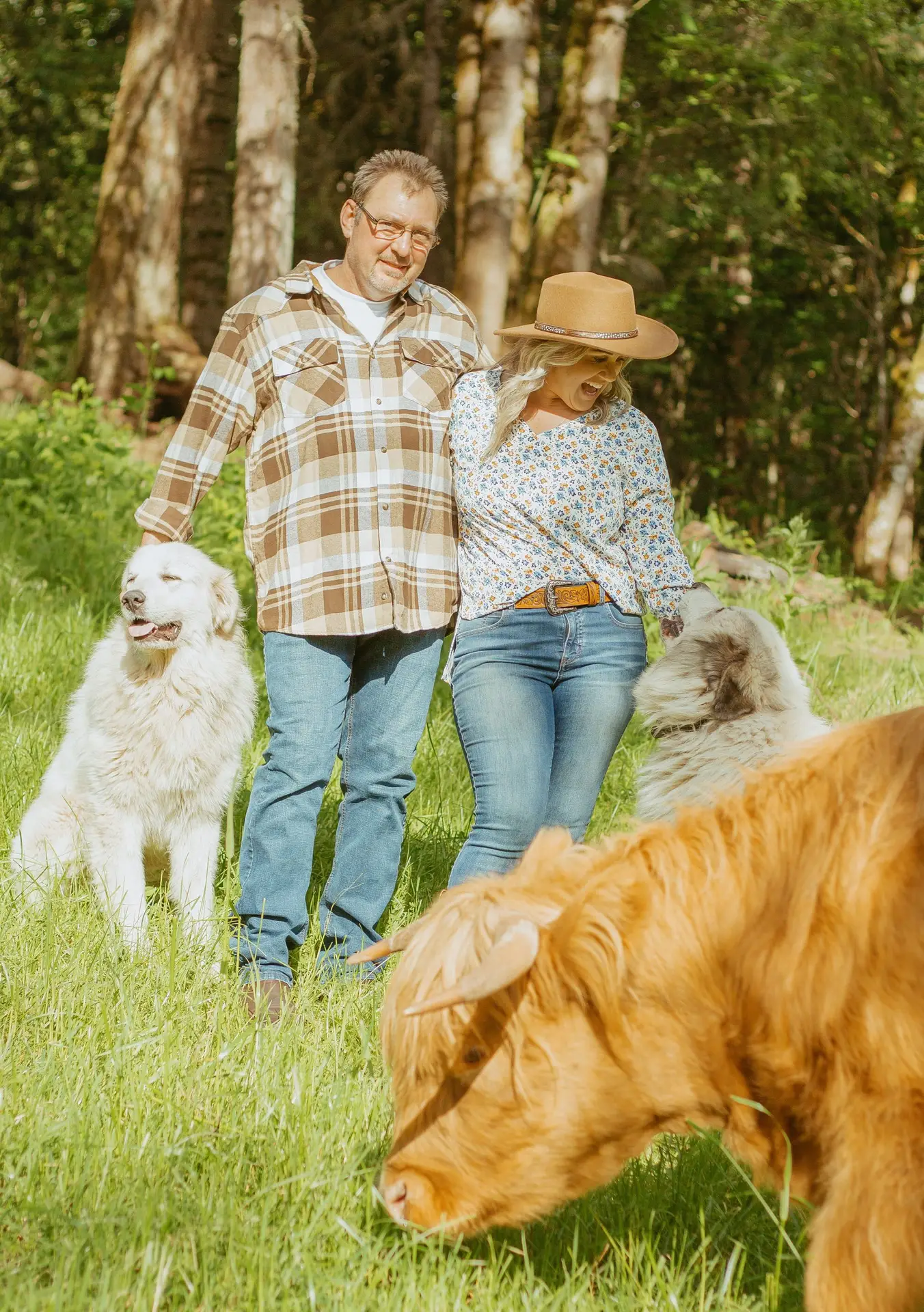
If you strip it all down, the truth is pretty simple. We started because we wanted to be more sustainable. We thought we were going to raise our own beef. We learned quickly that wasn’t what this farm was meant to be. So we changed direction.
Now, we’re building something that fits this land, our lives, and what we’re actually good at.
Not a big operation.
Not a production farm.
Not something rushed.
Just a small farm in the Pacific Northwest, doing its best to raise really good AHCA-registered Scottish Highland cattle — with intention behind every decision.
And if there’s one thing we’ve learned through all of this, it’s this:
Buy the best genetics you can afford.
Learn everything you can.
And don’t be afraid to change direction when you realize you’re building the wrong thing.
Because sometimes the plan you started with… isn’t the one you’re meant to finish with.
Curious about our breeding program or interested in a future calf? Learn more about what we’re building here.


Leave a Reply